7. Ommerschans Sword (Middle Bronze Age, ca. 1400 B.C.)
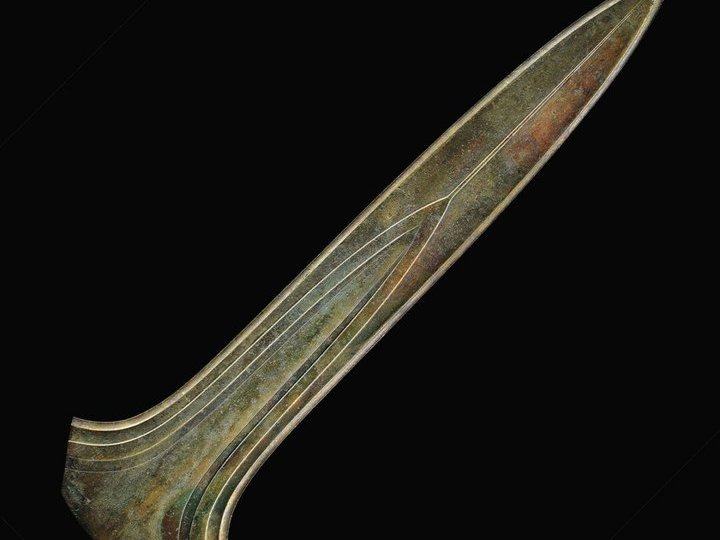
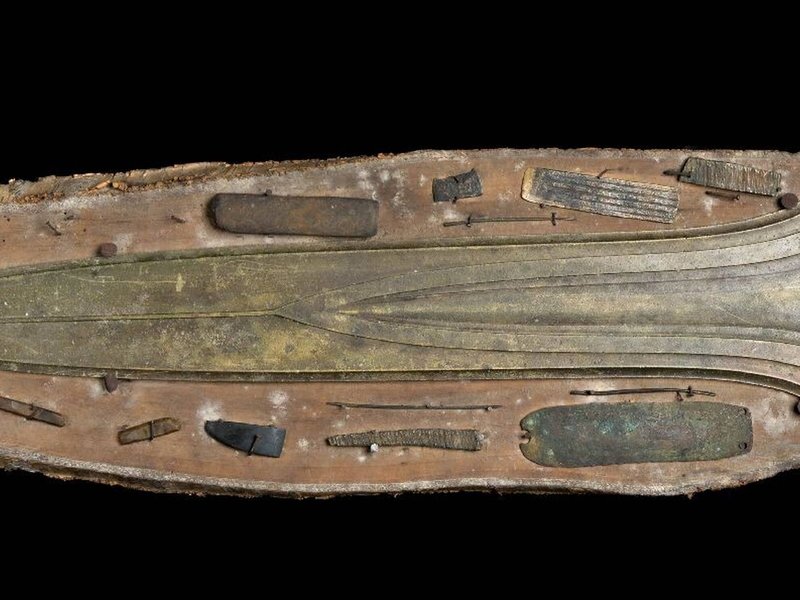
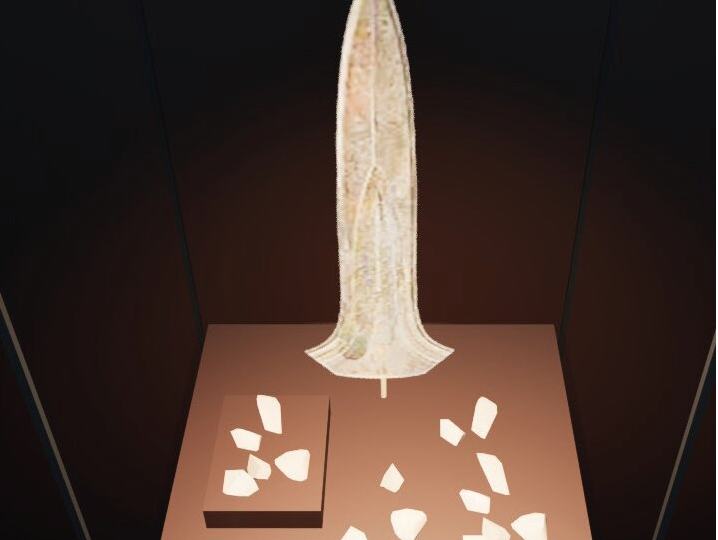
Before you lies the Ommerschans sword, a remarkable bronze artifact from the Bronze Age, dating from around 1500 to 1350 B.C. It was discovered in a marshy area in Overijssel, along with other bronze and stone objects.
The sword is large, heavy, and blunt. For that reason, it was not suitable for combat. It was likely used for ritual purposes and may have been deliberately left behind as an offering. Chisels, a razor, and whetstones were also found alongside it. This makes it clear that this was not simply a single isolated object, but a special ritual deposit.
Its shape is also striking. This sword belongs to a small group of six similar giant swords found in Europe. Swords like these were primarily intended to make an impression. They were costly, beautifully crafted, and likely made by highly skilled bronze casters.
The Ommerschans sword shows that people in the Bronze Age were concerned not only with practical use, but also with meaning. Sometimes they deliberately offered valuable objects to higher powers in the hope of receiving protection, good health, or a bright future.
The next listening point is the Bronze Sacrificial Knife from Daarlerveen
 To start the audio click on the arrow: ▶.
 Previous listening point
 List of audiotours
 List of listening points
 Next listening point
 More information
 Scan a QR code (when applicable)