Origin and construction
Origin and construction
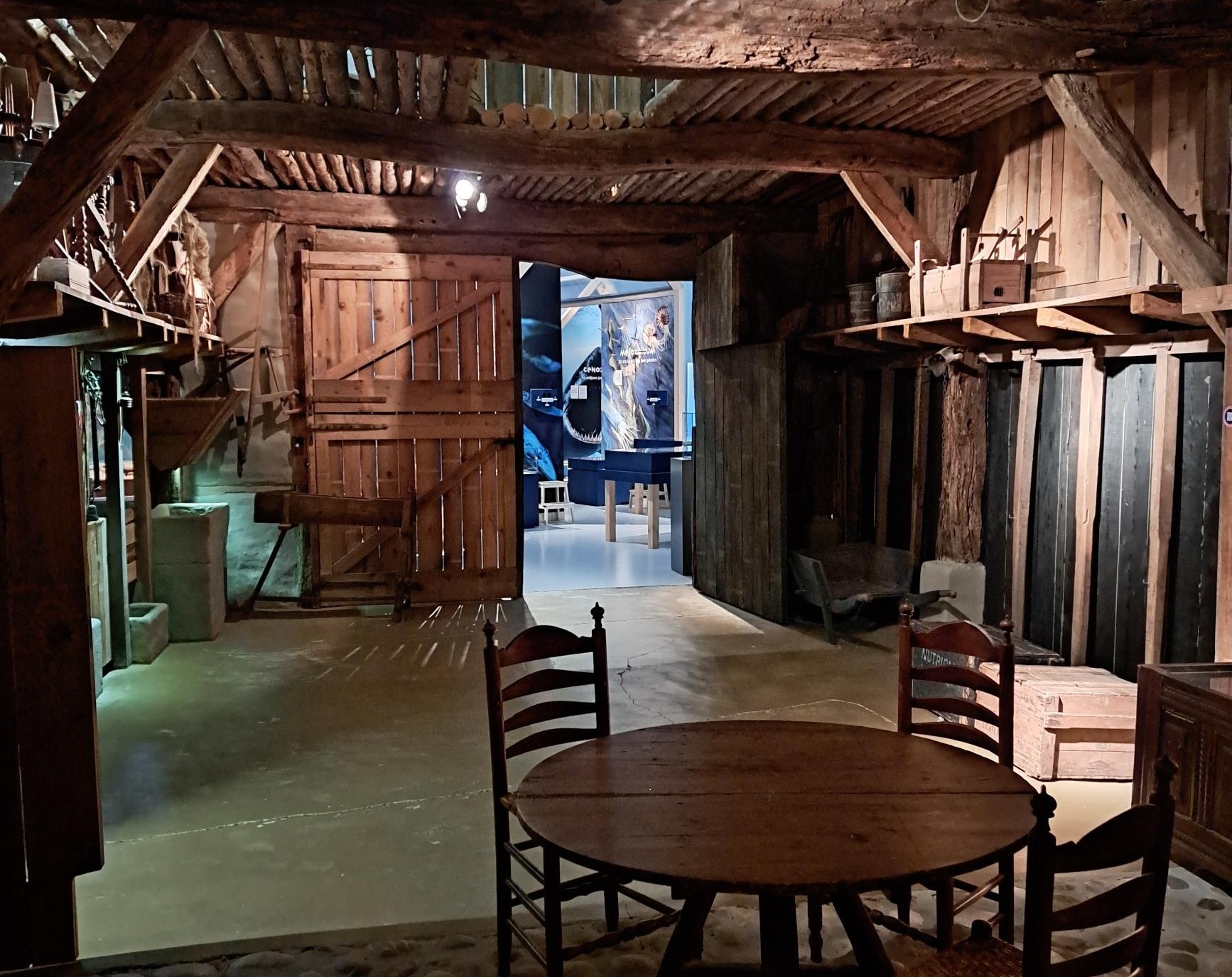
You are standing here in front of a Los Hoes. This type of farm emerged around the year 1100.
Often a few of these farms were located together. The residents helped each other when necessary; they called that in Twente noaberschap.
In the past, people built with materials that could be found nearby.
Such a farm consisted of a frame of wooden beams, which were called anchor trusses.
They made the walls from a wickerwork of twigs, which they sealed with a mixture of manure, loam and straw.
The facade was made of wooden planks and the roof of straw.
There was room at the top to store grain, and the open fire allowed food to be cooked and meat to be smoked in the attic.
In Twente, the Achterhoek, South Drenthe and the adjacent part of Germany, farms were often built this way.
The Los Hoes in the museum is more modern. It has stone walls, tile roofs and a chimney.
Over the centuries, living became more comfortable and eventually a real chimney was added.
If you look closely, you will see that this Los Hoes is not completely complete.
The left wing is missing because there was not enough space in the museum.
The cows were usually kept there for manure and milk.
The framework of these farms therefore consisted of anchor trusses and wooden beams.
The walls were made of a wickerwork of twigs and a clay layer. The roof leaned on the anchor trusses and the roof covering was made of straw.
Now that you know something about construction, we will tell you about the name Los Hoes. in the next story.